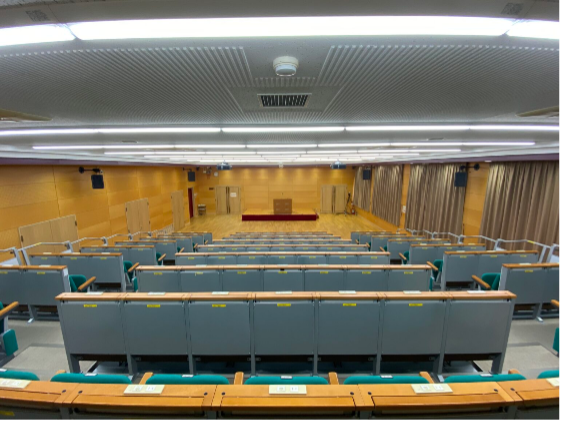
The 3rd International Symposium on Software Fault Prevention, Verification, and Validation


30 November ~ 1 December 2026 - Matsuyama, Ehime, Japan

Welcome to the website of the 3rd International Symposium on Software Fault Prevention, Verification, and Validation (SFPVV2026)

Software fault prevention, verification, and validation are essential and important approaches to ensuring software productivity, reliability, and qualities. Fault prevention focuses on the issues of how to prevent the introduction and occurrence of faults in software systems. Verification is a means to rigorously check whether software systems satisfy their specification or properties. Validation refers to the technologies and activities for confirming whether the behavior and performance of software systems satisfy the user’s requirements. Various techniques and supporting tools have been developed to fulfill the tasks of software fault prevention, verification, and validation, but many difficulties and open problems remain unaddressed.

This symposium aims to invite researchers and practitioners working on software quality assurance to exchange ideas and to discuss how formal approaches, testing-based approaches, AI approaches, and their combinations can be studied, established, and supported to fulfill the goals of fault prevention, verification, and validation. All people who are interested in the topics mentioned above are welcome to submit papers and to participate in the symposium.

Scope and Topics

Authors are invited to submit technical papers describing original and unpublished work on, but not limited to, the following topics:

  • Specification and Prototyping
  • Specification and Testing
  • Refinement and Evolution
  • Formal Verification and Review
  • Testing-Based Formal Verification
  • Bug Prediction and Reliability
  • Modeling
  • AI and Specification
  • AI and Code Generation
  • AI and Testing
  • AI and Verification
  • Human-Machine Pair Programming
  • Human-Machine Pair Review
  • Supporting Tools
  • Case studies
  • Application experience

Registration

Please contact Dr. Junjun Zheng by email at jzheng@hiroshima-u.ac.jp regarding any issues in relation to registration and payment as well as invitation letter for visa application (if applicable).

1.Each accepted paper for SFPVV2026 symposium must have at least one author registered for SFPVV2026 in the category of Author Registration by the indicated due date. This policy applies to each accepted paper, NOT each author.

2.All the registrations and payments should be made using the online registration system provided in the SFPVV2026 homepage. The online registration supports Credit Card payment only. Not expected, but just in case that the online registration and payment cannot be made for a good reason, other means for payment (wire-transfer, cheque, online-transfer and so on) can be considered. In that case, please contact Dr. Junjun Zheng by email (jzheng@hiroshima-u.ac.jp) as early as possible. Registration can be considered completed only after the full payment has been received.

3.All the fees and payments are in Japanese yen (JPY).

4.Registration cancelation policy: Registration fees will be refunded only if the cancellation request is submitted in writing by email with a good reason and no later than 20th October 2026. Cancellations will be subject to a cancellation fee to cover administrative charges. No refunds will be issued for cancellation requests received after 20th October 2026.


Venue

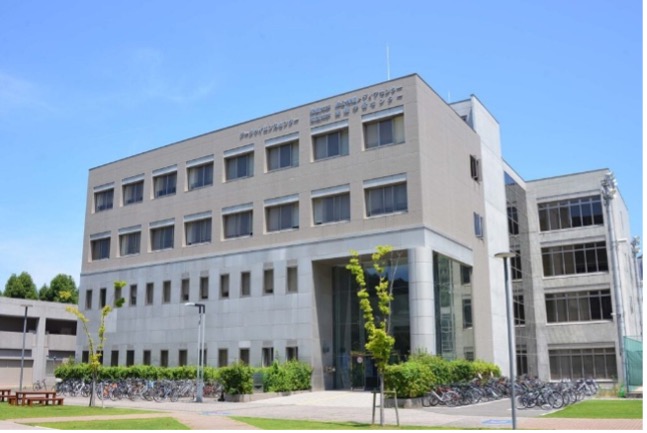
The 3rd International Symposium on Software Fault Prevention, Verification, and Validation (SFPVV 2026) will take place at the Center for Information Technology, Ehime University (CITE). CITE is on the university's Johoku Campus, which is on the north side of Matsuyama Castle, within walking distance of central Matsuyama.

CITE is one of the key departments of the Institute for Development of Digital Human Resources (IDDHR). CITE supports information technology education and academic research activities in Ehime University by managing the university's information infrastructure and network security.

Accommodation

TBD

Keynote Speakers

TBD

Important Dates

  • Full/Regular Paper Track
  • Submission Deadline: 1 September 2026

    Notification: 29 September 2026

    Camera-ready: 20 October 2026

  • Presentation Track
  • Submissions: 15 September 2026

    Notification: 8 October 2026


    Submission and Publication

    Two types of submissions are possible: presentation papers and regular papers. Both types of papers should be written in English. All papers should be submitted using the EasyChair link: here. Accepted presentation papers will not be included in the proceedings of the symposium; only the accepted regular papers will be included in the proceedings, which will be published in the Springer LNCS series. The details of the symposium can be found in the symposium homepage.

  • A regular paper must not have been published or be concurrently considered for publication elsewhere. Each regular paper should not exceed 18 pages (including references) in the Springer LNCS format.
  • A presentation paper is not required to report mature research results but expected to include new ideas or progress in ongoing research projects. Each presentation paper must provide a clear title and an extended abstract in 2 pages in the Springer LNCS format.
  • Cooperations

    ehime     HU     ehime     IPSJ     IEICE     JSSST

    Supported by Ehime University

    Hiroshima University

    Institute for Development of Digital Human Resources, Ehime University

    IPSJ SIG Software Engineering

    IEICE SIG Software Science

    JSSST SIG Foundation of Software Engineering

    Symposium Organizers

    Steering Committee

    Tadashi Dohi, Hiroshima University, Japan
    Shaoying Liu (Chair), East China Normal University, China
    Geguang Pu, East China Normal University, China
    Tatsuhiro Tsuchiya, University of Osaka, Japan

    General Chair

    Tadashi Dohi, Hiroshima University, Japan


    Program Chairs

    Hirohisa Aman, Ehime University, Japan
    Xi Wang, Shanghai University, China


    Finance Chair

    Junjun Zheng, Hiroshima University, Japan

    Local Arrangement Chairs

    Hiroshi Takahashi, Ehime University, Japan
    Shozo Saeki, Ehime University, Japan


    Web Master

    Jingchi Wu, Hiroshima University, Japan


    Program Committee

    Yamine Ait Ameur, IRIT/INPT-ENSEEIHT, France
    Sousuke Amasaki, Nanzan University, Japan
    Yoonsik Cheon, University of Texas at El Paso, USA
    Yujun Dai, Micron Technology
    Mara Downing, University of California Santa Barbara, USA
    Dingbang Fang, Fujian Normal University, China
    Marc Frappier, Université de Sherbrooke, Canada
    Sabine Glesner, Technical University of Berlin, Germany
    Kiyoshi Honda, Osaka Institute of Technology, Japan
    Rao Lei, Southwest Petroleum University, China
    Jiandong Li, Peking University, China
    Jingyue Li, Norwegian University of Science and Technology, Norway
    Yang Li, Tianjin University, China
    Chen-Kai Lin, Academia Sinica, Taiwan
    Ai Liu, Nanjing University of Aeronautics and Astronautics, China
    Osamu Mizuno, Kyoto Institute of Technology, Japan
    Akito Monden, Okayama University, Japan
    Hiroyuki Nakagawa, Okayama University, Japan
    Shin Nakajima, National Institute of Informatics, Japan
    Fumiko Nagoya, Nihon University, Japan
    Hiroyuki Okamura, Hiroshima University, Japan
    Jun Pang, University of Luxembourg, Luxembourg
    Yuji Sato, Hosei University, Japan
    Wuwei Shen, Western Michigan University, USA
    Xinfeng Shu, Xi'an University of Posts and Telecommunications, China
    Tatsuhiro Tsuchiya, University of Osaka, Japan
    Masateru Tsunoda, Kindai University, Japan
    Pingyan Wang, Guangdong University of Petrochemical Technology, China
    Tomoyuki Yokogawa, Okayama Prefectural University, Japan
    Zhen You, Jiangxi Normal University, China
    Naijun Zhan, Chinese Academy of Sciences, China
    Jian Zhang, Chinese Academy of Sciences, China
    Jianjun Zhao, Kyushu University, Japan
    Junjun Zheng, Hiroshima University, Japan